Notice: With the Laurelin server shutting down, our website will soon reflect the Meriadoc name. You can still use the usual URL, or visit us at https://meriadocarchives.org/
Maegirth
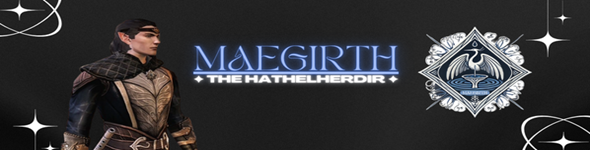
Maegirth, The Vengeful Heron of Gondolin
| Name | Maegirth |
|---|---|
| Status | Active |
| Occupation | -Former- 2nd Marshal of the House of the Fountain,-Former- Blademaster General of Gil Galad,-Current- Close Advisor and Blademaster of Elrond Half-Elven |
| Age | He woke up, he was never born. |
| Race | Elf |
|---|---|
| Residence | Lindon/Rivendell/Lothlorien/Felegoth |
| Kinship | Maegirthrim |
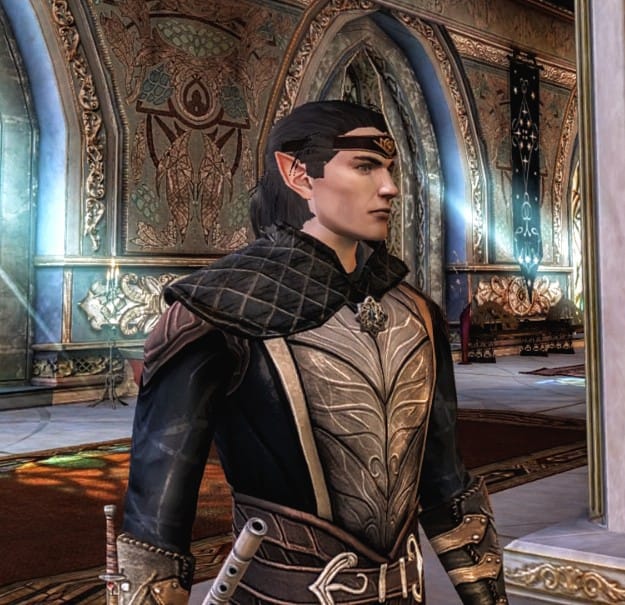
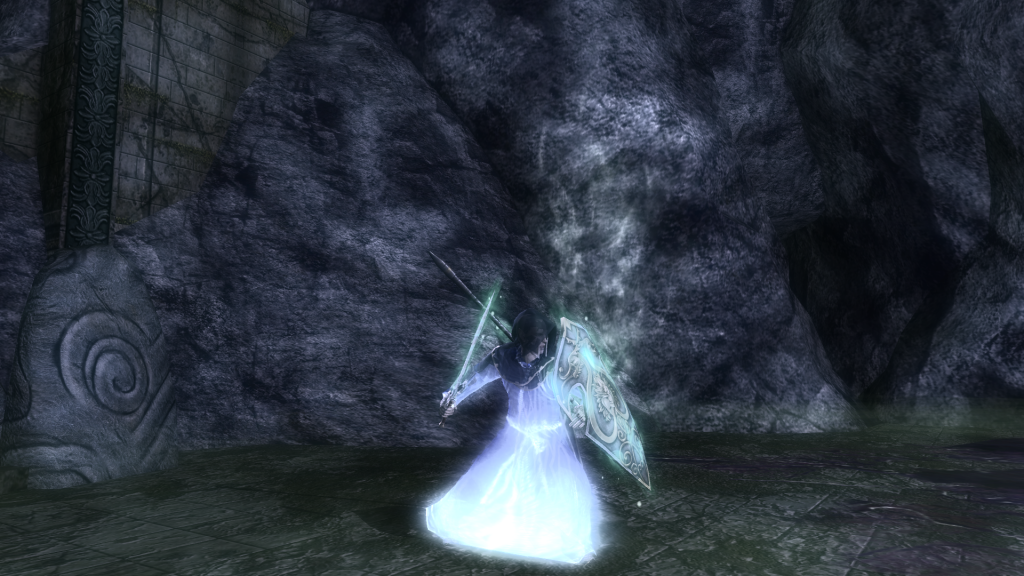
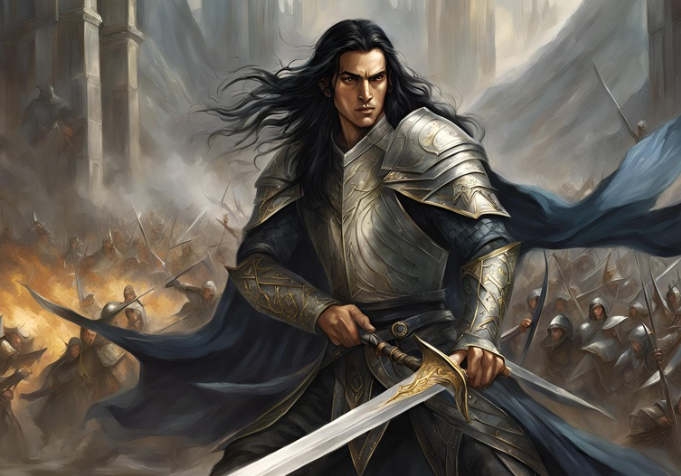
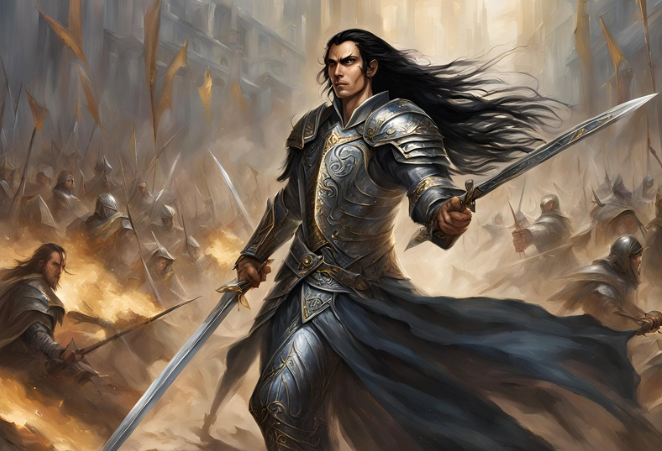
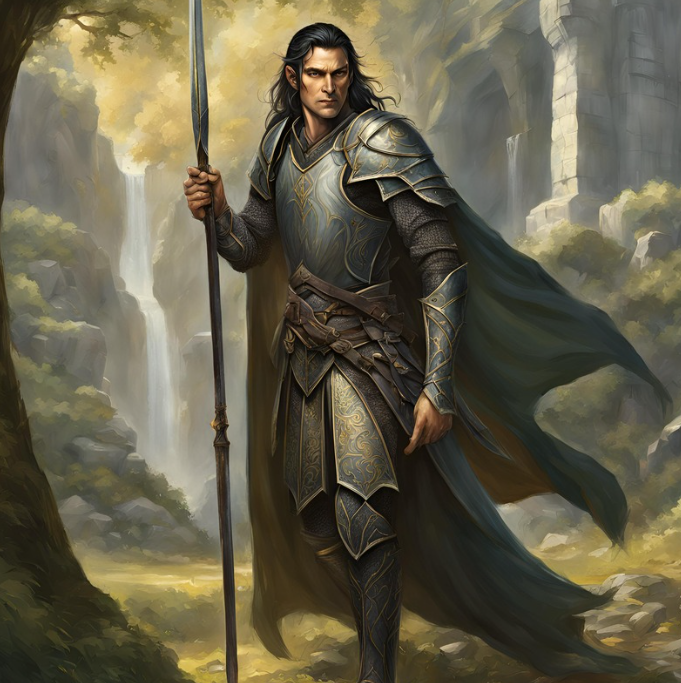
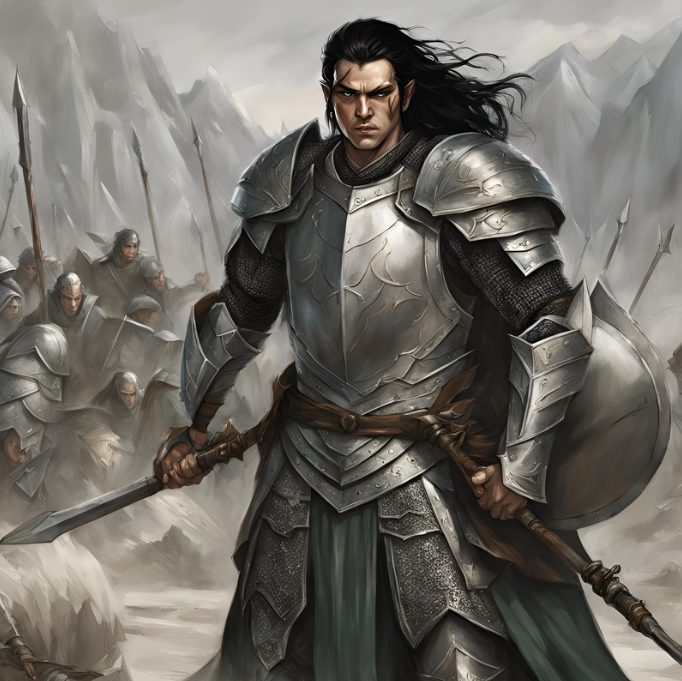
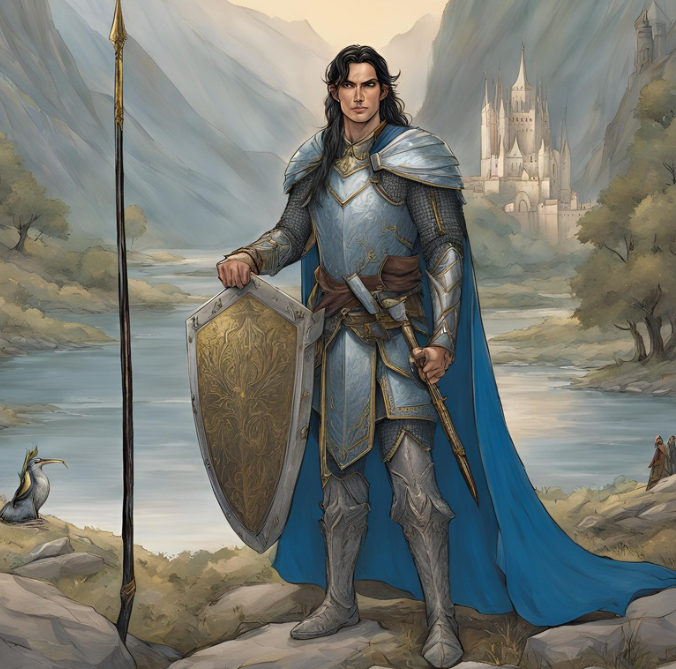
| Outward Appearance | Appearance: Maegirth's presence exudes ancient wisdom and quiet strength. His once raven-black hair, now streaked with silver, hints at his age and long history. His deep grey eyes, sharp and discerning, reflect a lifetime of memories—both sorrowful and steadfast. His noble features, subtly lined, convey a sense of resilience and dignity earned over centuries. Maegirth favors attire that blends practicality with elegance. He often wears armor crafted from mithril and leather, combining protection with the freedom of movement, a reflection of his warrior past. His armor is adorned with subtle accents of silver, and his tunics and cloaks are shades of blue, echoing the plumage of the blue heron that has long inspired him. The sigil of a heron wading above a fountain, a symbol of his ancient history and the deadliness that comes with it, adorns his gauntlets and the base of each of his blades, be it sword or spear. Something that any that recognize it from legends and stories, upon locking their eyes with it, they know their fate is sealed if he so wishes it. He moves with the grace of a seasoned warrior, carrying a spear whose blade is shaped like a bird’s beak on his back when out in the wild, an ancient gondolin made sword on his hip and an ancient but seemingly pristine white flute, a tribute to his past as the 2nd Marshal of Ecthelion's House of the Fountain. His helm, often worn in battle, bears the likeness of a heron, complete with a sharp, beak-like spike. This combination of silver and blue, along with the intricate feather and line motifs, signifies his enduring connection to the bird that has been a lifelong symbol of his strength, elegance, precision and ruthlessness. Outside of a battlefield he prefers hair ties, elven circlets and leather bands to adorn his head. Personality: Maegirth is a solemn and contemplative Elf, carrying the weight of ages and loss. He often appears distant, preferring solitude or the company of a few trusted allies over larger gatherings. In social settings, he is reserved, speaking little unless engaged by those he respects, especially fellow Elves or the wise among Men, such as the Dúnedain. He harbors a quiet mistrust of Men, stemming from the grief of past betrayals, though he treats them with courtesy. Dwarves, he regards with cautious respect, acknowledging their skill in craft but maintaining a polite distance unless approached. Among those he considers friends, Maegirth is a source of calm wisdom and subtle humor. His laughter is rare but genuine, often prompted by shared memories of better days. He speaks with reverence of the ancient beauty of Gondolin and Valinor, finding solace in recalling the splendor of his past. Though slow to anger, his wrath is formidable, and those who earn it will find him an implacable foe. Maegirth has a deep respect for craftsmanship, drawing from his long years under Aulë’s tutelage. He is ever eager to learn, whether it be new skills in craft or the forgotten histories of Middle-earth. His enduring love for the land manifests in his keen appreciation for its beauty and his commitment to protecting it from the encroaching darkness. Languages: Maegirth's mastery of language reflects his long life and many travels. His native tongues, learned in the dawning days of Arda, are Primitive Quendian and Common Eldarin, the ancient roots of all Elvish speech. He is fluent in the refined, noble Quenya of the Noldor, though in his daily speech, he prefers the flowing sounds of Sindarin. His knowledge extends beyond the languages of the Elves, as he is conversant in the Common Tongue, or Westron, though it carries the lilting melody of his elvish heritage when he speaks it. Though he has spent time among Durin’s folk, his knowledge of Khuzdul, the secret language of the Dwarves, remains moderate. He knows enough of their speech to converse respectfully and to show his understanding of their customs, but the deeper intricacies of the tongue elude him. Lastly, while Maegirth knows much of the Black Speech of Morgoth’s servants—having learned it for the sake of understanding his enemy—he seldom utters its foul words, loathing the malice they carry. Familiarity: To those who lived through the trials of the First Age and the years that followed, Maegirth is remembered as a figure of confidence and power. He is known as "Hîr" and "Lord-Marshal" to those who once followed Fingolfin and later Turgon to Gondolin, especially among the House of the Fountain, where his skill with the blade and leadership in battle are legendary. Many from Nargothrond, Doriath, Sirion, and Himring would recall him as one of the most formidable warriors the Noldor ever produced—his armsmanship especially with bladed weapons and tactical brilliance earning him respect and fear in equal measure. Even in the Second and Third Ages, as the kingdoms of the Elves began to dwindle, Maegirth remained a name spoken with reverence. He was a welcome guest in all the remaining Elven realms—Lindon, Rivendell, Lothlórien, and Thranduil's halls of Felegoth—respected not only for his prowess but for his role as a mentor. Some of the greatest warriors of these latter days owe their skill to his instruction. Among them were the likes of Haldir of Lothlórien, Thranduil himself, the twins Elladan and Elrohir, and even Lady Arwen Undómiel. Nor was his tutelage confined to the Elves alone; many of the Dúnedain captains and rangers benefited from his expertise, and his martial wisdom was often sought by the men of the West. Maegirth was no stranger to Imladris, the hidden refuge of Rivendell, where he and Glorfindel of the House of the Golden Flower guarded its borders alongside its sentinels. Their eyes kept the valley safe from prying eyes, and they ensured that few enemies could ever find their way to the hidden stronghold. While Glorfindel was called west to aid in the wars of Arnor against the Witch-king of Angmar, Maegirth was sent eastward, to Lothlórien and the halls of Thranduil, where his presence helped to stem the rising tide of darkness from Dol Guldur and the shadowed woods of Mirkwood until he was recalled back to Imladris. Though Maegirth was a warrior of the Eldar, even the Dwarves of Durin’s line knew of him, though their praise was guarded. Gloin, son of Groin, had spoken of him after his time in Rivendell, and there were those among the Dwarves who, despite their natural reticence towards the Elves, recognized Maegirth’s valor and skill in battle. In Gondor, the name of the “Heron Blademaster” still lingered in tales and songs from the days of Gil-galad, though few Men would recognize him for who he truly was should they ever meet him. Those who had been well-schooled in the lore of the Elder Days might realize the truth, but most would know only whispers of a distant legend, passed down through fading memory.
|
|---|
Background
In the days when the world was young, in the Year of the Trees 1050, the first awakening of the Elves came to pass on the shores of Cuiviénen. Among the earliest to stir were the Minyar, who stretched their limbs and found their voices in the nascent light of Arda. These firstborn, eager and curious, roamed the lakeside in search of others like themselves and soon encountered the Tatyar, the second clan to awaken.

Among the original fifty-six Tatyar was our fair Elf, who would come to experience the wonders of Arda in all their splendor. He awoke to the touch of Tata, the father of the Tatyar, and beheld the sparkling reflections of the lake's waters under the starlit sky. As he rose from the ground, he felt as though he were in a dream, but the touch of water and sand soon assured him of the reality of his awakening. The myriad sensations and emotions that flooded over him made his skin shiver with delight. Like his kin, he revered Tata as their leader and followed him along the shores of Cuiviénen.
The Elves, eager to communicate, began to develop their language. Our Elf, in his wanderings, often mimicked the sounds of nearby birds to express his emotions. This, among other inspirations, contributed to the rich tapestry of sounds that would become their first language. This burgeoning form of speech quickly became second nature to him and his kin. Soon after, the awakening of the Nelyar, the third and final clan of the Quendi, signaled the beginning of Elven society. Their focus turned to mastering survival by the lake and refining their newfound gift of language.
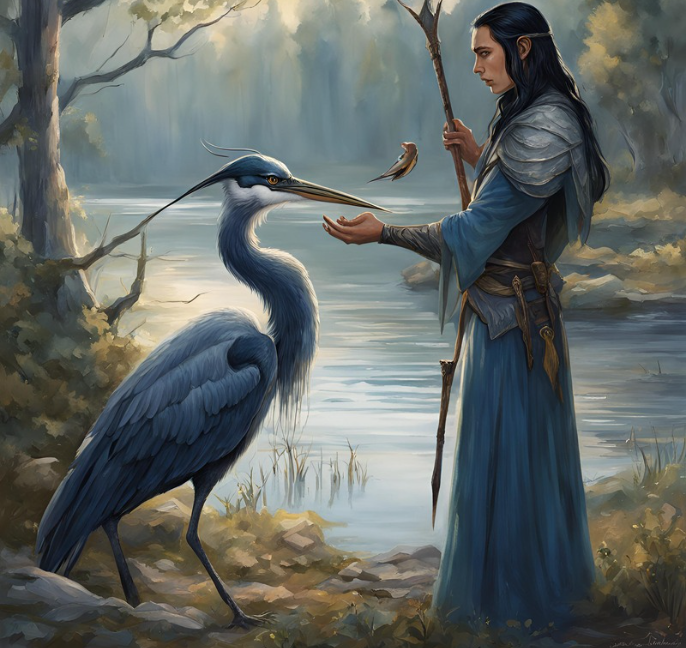
Our Elf, fond of wandering, delighted in the beauty and songs of the birds along the shores and rivers branching from Cuiviénen. One day, he followed a bird that captivated him: it had long, slender legs, a white coat with silver and blue plumage, a neck that could bend gracefully, and bright yellow eyes above a sharp orange beak. Entranced by the bird's elegance and hunting prowess, he crafted a primitive spear from a wooden shaft and a stone, imitating the bird’s skillful predation. The Elves, fascinated by this creation, began to refer to him and the bird by a name that reflected their shared cunning: Antelcaiwe.

Thirty years later, in the Year of the Trees 1085, Oromë the Hunter arrived to invite the Eldar to the Blessed Realm of Valinor. He taught the Elves to refine their speech into song and music and improved their hunting skills, transitioning from crude weapons to bows and arrows. However, even as he learned the ways of the bow, Andatelcaiw, as he was now known in Quenya, remained fond of spears, preferring their utility in catching larger game from the rivers.
In those days, Finwë, a leader of the Tatyar, and a close friend of Antelcaiw, was chosen alongside Ingwë and Elwë to journey with Oromë to Valinor and behold its splendor. While many Elves were filled with trepidation, others, including Andatelcaiw, were brave and curious. Upon Finwë's return, bringing tales of the Two Trees, Telperion and Laurelin, and the glory of Aman, Andatelcaiw pledged to follow him as his king to the Blessed Realm.
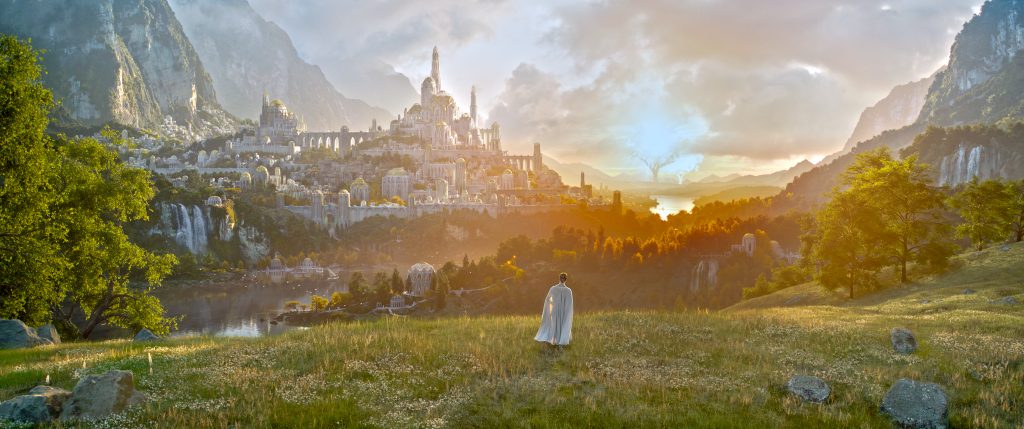
Thus did he and many of the Tatyar embark on the Great Journey to Aman, a long and arduous trek that would span many years. The path was fraught with challenges and wonders alike, as they crossed the vast expanse of Middle-earth and eventually the Great Sea, guided and aided by the Valar. Drawn by the promise of the Valar and the wonders of Valinor, they persevered, and in time, the shores of Aman came into view, heralding the end of their long journey and the beginning of a new chapter in their existence.
Being one of Finwe's Noldor lords, Andatelcaiw soon became a student of Aulë, the Vala of craft and smithing. Under Aulë's tutelage, he focused on refining his spearheads, seeking to make them more efficient and splendid. In his craftsmanship, he drew inspiration from the beak of the bird that had first captivated him, fashioning spearheads that mirrored its shape and sharpness.
Andatelcaiw was a trusted lord and counselor to Finwë, the High King of the Noldor. However, after the Valar's rejection of the Noldor's plea to return to Middle-earth and with Fëanor banished, Finwë gathered all his lords and told them of his decision to join his beloved son in exile. Andatelcaiw, among others, advised him otherwise, but there was no change of mind. Disheartened, Andatelcaiw found a kindred spirit in Fingolfin and his sons, especially Turgon and his friend Ecthelion. He admired Fingolfin's wisdom and strength but he enjoyed the company of Turgon and Ecthelion when it came to sparring or hunting. The three formed a strong bond, sharing a vision for their people's future that contrasted with Fëanor's fiery and reckless ambition.
In the Year of the Trees 1495, a great shadow fell upon the host of the Noldor as they made their way to the shores of Alqualondë. There, seeking the swan ships of the Teleri to bear them across the sea to Middle-earth, Andatelcaiw, alongside his daughter, found himself ensnared in the dreadful conflict known as the Kinslaying. This act of desperate strife, born of misunderstanding and dire necessity, left deep wounds upon his soul. His daughter, a steadfast and resilient companion, provided him solace as they navigated the chaos. Sadly, his young son and beloved wife did not survive the harsh crossing of the Helcaraxë, their fates now a somber memory lost to the ages.
Throughout the arduous journey across the icy wasteland of the Helcaraxë, Andatelcaiw, though not one of the foremost leaders, played a crucial role in sustaining the host’s progress. His experience and practical leadership, alongside that of Ecthelion, proved indispensable in managing the hardships and minimizing the losses endured by their people. Their tireless efforts helped guide the host safely through the perilous ice, keeping hope alive in the face of overwhelming adversity.
Upon their arrival in Middle-earth, Andatelcaiw continued to serve with dedication. As Turgon, guided by a vision from Ulmo, led their people to the hidden vale of Tumladen, Andatelcaiw journeyed with him, steadfast in his resolve. In recognition of his unwavering service, Ecthelion bestowed upon him a new helm, crafted in the likeness of the beak of the great blue heron that had inspired him. This spiked helm, both a symbol of his experience and a reflection of his past, marked a new chapter in his life. A chapter that would change him forever.

In this new era, Andatelcaiw, who now bore the Sindarin name Maegirth, meaning "Piercing Beak," devoted himself wholeheartedly to the defense and construction of Gondolin, the hidden city that rose in the vale of Tumladen. As a valued Noldor lord, he pledged his loyalty to Ecthelion and the House of the Fountain, serving with both honor and skill as its second marshal and chieftain of the 7th Gate on a pale silver horse. He was gifted by Ecthelion himself a flute in the colors of his favorite bird which signified his role and importance in the noble house of the Fountain.
The memory of the Kinslaying and the loss of his loved ones lingered as a solemn reminder of the heavy price of pride and the vital need for unity. Under the wise rule of Turgon and the valiant leadership of Ecthelion, Gondolin flourished as a shining beacon of hope and beauty amidst the encroaching darkness. Maegirth, now woven into the fabric of this grand legacy, continued to serve with unwavering commitment, finding both purpose and redemption in the hidden splendor of Gondolin. He stood alongside his daughter and the noble allies who shared in the vision of a brighter future for their people. When Eöl attempted to disrupt their peace, Maegirth was among the marshals who carried out Turgon's sentence, casting Eöl from the walls for his crimes.

Later on during the Nirnaeth Arnoediad, he was one of the marshals of Ecthelion who were part of the 10,000 Gondolindrim that Turgon brought to the battle. He fought valiantly and fiercely even when it became clear it was a losing battle, frustrated, he retreated with the others back to Gondolin as Húrin and Huor kept Morgoth's forces at bay, ending with the imprisonment of Húrin and the death of Huor alongside their comrades.
In the 510th year of the First Age, Gondolin fell. Maegirth stood his ground as part of Ecthelion's House, ready to defend the beleaguered city. Ecthelion's House, renowned for its valor and staunch resolve, stood as a bulwark against the tide of Morgoth’s unrelenting host.
As the battle raged with a fury unmatched, and Ecthelion's troops joined the fray, Maegirth fought valiantly by the side of Ecthelion and his closest comrades. Their courage shone brilliantly amidst the encroaching darkness, inspiring those around them to fight with unyielding determination. They faced down the Balrog's terror and the overwhelming odds with a resolve born of their love for Gondolin and the hope for a brighter future.
Despite their valor, the House of the Fountain could not hold back the inevitable. Amidst the chaos, Maegirth beheld the fall of Ecthelion, who, with his last breath, struck down Gothmog, the lord of Balrogs with his diamond spiked helmet. The valiant deed stirred Maegirth's heart with a mixture of sorrow and pride and in a rush he picked up the now discarded glittering shield of Echtelion. The defenders fought to the last, but the tide of Morgoth's forces swept through Gondolin, leaving ruin in their wake.

In the aftermath of the city's fall, Maegirth joined the remnant of Gondolindrim who escaped the carnage. Together, they embarked on a perilous journey, carrying with them the weight of their loss and the hope for a new beginning. Amidst the trials that followed, Maegirth found himself in the company of Glorfindel and the survivors of the Golden Flower House. He knew and was a friend of Glorfindel from the peaceful times of Gondolin but he forged even stronger bonds with his fellow survivors, united by their shared grief and determination to endure the traumatic events they witnessed.
After a few days of hiding, Maegirth found his daughter alongside Glorfindel's retinue of the House of the Golden Flower and assisted him in protecting the escapees, which Glorfindel glady welcomed it. They successfully traversed the mountains of Cristhorn, facing peril and adversity along the way. When a Balrog emerged to hinder their escape, Maegirth's valor shone once more as he stood by Glorfindel's side, ready to fight for their survival. Tragically, Maegirth's daughter perished in this final battle, her life taken by the vile creature's flames.
The sorrow of her loss weighed heavily upon Maegirth's heart, driving him to fight with unyielding fury, but Glorfindel's valiant sacrifice ensured the escape of the survivors while cutting the way out from Maegirth joining. His memory would forever remain etched in Maegirth's heart as a symbol of heroism and selflessness.
Now the wake of Gondolin's fall, Maegirth chose a path of solitude leaving the other survivors after they were close enough to the Mouths of Sirion with these words:

“Do ye believe I find solace in witnessing the final breaths of those dear to me? Each widow wrought by our strife, each child left fatherless, each father bereaved of his progeny—these are burdens they shall share with Death and pay the toll with Me. My heart blazes with the fire of vengeance, and my foes shall not know from whence their doom shall strike. Yet, such reckoning shall not unfold within the Haven of Sirion. It'll be by my beak, my skewering!”
Consumed by grief and a desire for vengeance, he became a lone avenger, wandering the desolate lands, striking against the remnants of Morgoth's forces wherever he found them. His heart, hardened by the loss of his family and friends, beat with a fierce determination to honor their memory through his actions.
During the final battle of the First Age, Maegirth, with the last Noldor survivors, joined the Host of the Valar. Their united front, with the aid of the Valar, ensured Morgoth's ultimate defeat. As the Dark Lord was cast into the Void, Maegirth felt a sense of fulfillment and closure, having played his part in the downfall of the greatest evil to ever plague Middle-earth.

But his story did not end there. After centuries of war and loss, he packed his armor, spearheads, and Ecthelion's shield in a chest, keeping only some simple clothes and his flute. He joined under the banner of Gil-galad and Círdan as they went to Lindon, where he was honored as a war hero. When Mandos lifted the Doom of the Noldor, Maegirth was offered passage to the Undying Lands. To this, he replied, "I am home," and chose to be regarded as a fisherman, which he had loved most in his earliest days. Until the rise of Sauron in the Second Age, he kept himself secluded from politics and court life, rarely appearing, yet always welcomed as a surprise.
Gil-galad, recognizing Maegirth's valor and wisdom, offered him one of the highest honors and titles—a Master of Blades, or Blademaster — as a coy request for Maegirth's support against Sauron. To Gil-galad's surprise, Maegirth refused. He was much older than Gil-galad and had witnessed more court schemes in Gondolin than anything the High King could conjure. Gil-galad realized his error and accepted the refusal with honor.
But in the year 1600 of the Second Age, as Maegirth was skinning his latest catch in his fishing cabin, he felt a warmth within, a tremor upon his skin. He heard four knocks at the frame of the door behind him, and as he turned, he was momentarily blinded by a radiant light. Regaining his vision, he saw Glorfindel, returned from the Halls of Mandos, sent back by the Valar due to the appearance of Annatar in Númenor. Maegirth shed a tear and embraced his old friend, who embraced him in return.
This reunion rekindled an old spark in Maegirth's heart, though he did not yet realize it. Over the next few days, they spent their time talking and hunting. Eventually, Glorfindel disclosed the true reason for his return: the High King had sent him to offer Maegirth the title of Blademaster once more and to join him in battle. Maegirth realized the spark was a fierce determination against the darkness that still tainted his beautiful home. Seeing his friend returned, hope grasped his heart, and he agreed.
He opened his now dusty chest, and there, as pristine as the day he placed them inside, were his spearheads, Ecthelion's shield, and his armor with his fierce helmet. He smiled, knowing that now, as a Master of Blades, he could once again bring vengeful fury upon Sauron's hordes, just as he had done against Morgoth's.

For centuries, Maegirth served alongside Gil-Galad, Glorfindel and Elrond, lending his wisdom and skill to the councils of war. His reputation as a Blademaster grew, and many Elves sought to learn from him, yet he remained humble and secluded, ever mindful of the past sorrows and losses that shaped his resolve. When the Last Alliance of Elves and Men was formed, Maegirth fought valiantly in the great battles against Sauron. At the slopes of Mount Doom, he witnessed Gil-galad's fall and saw Isildur claim the One Ring. The triumph was bittersweet, for though Sauron was defeated, his malice lingered, bound to the Ring.
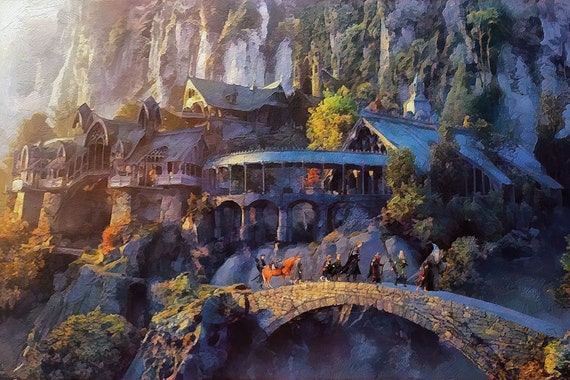
In the aftermath, Maegirth retreated to Rivendell, finding solace in the serene valley. There, he became a trusted advisor to Elrond, aiding in the preservation of knowledge and the defense of Imladris. As the centuries passed, the world changed around him even more. The great kingdoms of Men rose and fell, and the Elves' influence waned. Yet Maegirth's spirit remained undimmed, a steadfast warden of the light against the encroaching darkness.

In the year 2941 of the Third Age, Maegirth observed with quiet interest the arrival of a company of Dwarves and a Hobbit at Rivendell. He listened intently to their tales and adventures, recognizing in Bilbo Baggins a small yet significant spark of courage and resilience. The events of that time, culminating in the Battle of the Five Armies, heralded a new age of unease, as the shadow in the East grew once more.
As the years turned to decades, the whispers of Sauron's return became undeniable. The Council of Elrond was called, bringing together representatives of the Free Peoples of Middle-earth. Maegirth, seated beside Glorfindel, listened as the fate of the One Ring was debated. He saw in Frodo Baggins a kinship to Bilbo, a quiet strength and determination that belied his small stature.
When Frodo was chosen to bear the Ring to Mount Doom, Maegirth's heart stirred with a mix of hope and foreboding. He offered his counsel and support to the Fellowship, knowing well the perilous path that lay ahead. As the Fellowship departed from Rivendell, Maegirth watched with a solemn gaze, a silent warden whose long years had taught him the value of every small light against the darkness.
| Friends | |
|---|---|
| Relatives | His whole family (wife and two children) perished during the First Age |
| Rivals/Enemies | Any that would harm free folk be it with reason or no reason at all |
| Loves | Fishing, Hunting and Music when he travels. Fighting, sparring and training when in more serious times of need. Forging spearheads and Philosophy |
|---|---|
| Hates | Any servants or spawn of Melkor, Disloyalty, Lack of Respect and Honor |
| Motivation | Stability, Serenity, Honor and Loyalty |
| Quotes | "My heart blazes with the fire of vengeance, and my foes shall not know from whence their doom shall strike." |